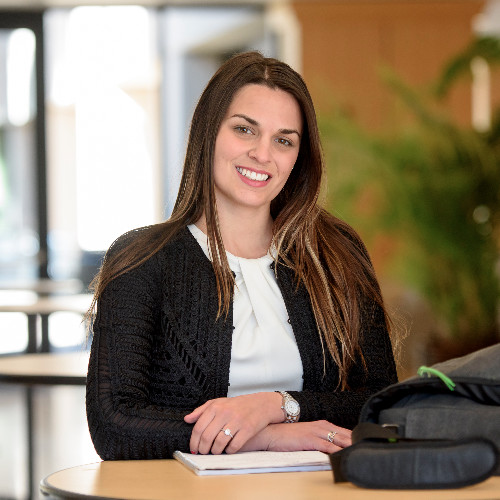
Bio
I am a Principal Research Scientist in Physical AI at Siemens, where I develop physics foundation models and physics-constrained machine learning methods for scientific computing. My research focuses on accelerating the simulation of complex physical systems by combining modern machine learning with scientific computing to advance engineering and scientific discovery. Prior to joining Siemens, I spent nearly eight years at AWS AI, where I advanced from Applied Scientist to Senior Applied Scientist. I was a co-creator of the Chronos time series foundation model and the Mitra tabular foundation model, and I led the AI for Science initiative. My work has resulted in more than 30 peer-reviewed publications at leading machine learning conferences, including NeurIPS, ICML, and ICLR, over 4,000 citations, open-source software, and AI technologies deployed in large-scale industrial systems. I have delivered invited talks at various institutions including UC Berkeley, Stanford University, the University of Oxford, the Alan Turing Institute, and AI for Good. I have served as an Area Chair for NeurIPS, ICML, ICLR and AAAI and organized workshops in AI for Science. I received my Ph.D. and M.S. in Computational and Mathematical Engineering from Stanford University, where I was advised by Professor Margot Gerritsen. During my doctoral research, I developed novel finite volume methods for nonlinear porous media flow. I earned my B.A. in Applied Mathematics, with highest honors, from the University of California, Berkeley. My research interests lie at the intersection of machine learning, scientific computing, and numerical methods, with a focus on AI for Science.
News
- I have joined the FluidsBench scientific and industrial advisory board!
- Our workshop on Physics-Governed AI for Energy was accepted at AAAI 2027!
- Our workshop on Foundation Models for Temporal Systems: From Forecasting to World Modeling was accepted at NeurIPS 2026!
- We are organizing a Deep Learning for Summer School at the Lawrence Berkeley Lab (LBL) on July 20-24, 2026!
- Our 3 papers on compressing and designing time series foundation models and enforcing differentiable hard constraints with UQ with applications to SciML and hierarchical forecasting were accepted at ICLR 2026!
- Two of my research works made the list for Amazon Science’s Top 5 for 2025 and the Top 10 Amazon Science blogs for 2025: our tabular foundation model Mitra and SciML works on Science in the Age of Foundation Models.
- My perspective piece on Science in the Age of Foundation Models discusses the potential and current limitations of foundation models for science with applications to weather forecasting and aerodynamics.
- We have added support for Multi-LoRA with GPT-OSS in vLLM. See our blog for our optimizations!
- Our tabular foundation model (TFM) Mitra, which is trained purely on synthetic data is accepted at NeurIPS 2025 and is available on Hugging Face and AutoGluon 1.4!
- See my talk on time series foundation model Chronos at the Lawrence Berkeley Lab (LBL) deep learning summer school here!
- We are hosting a ICLR 2024 Workshop on AI4DifferentialEquations In Science!
- I gave an invited talk on “Physics-constrained Machine Learning for Earth and Sustainability Science” at the 2nd AI for Good Webinar Series for AI for Earth and Sustainability Science.
- I gave an invited talk on “Physics-constrained Machine Learning for Scientific Computing” at the Machine Learning and Dynamical Systems Seminar at the Alan Turing Institute with the highest number of views and a corresponding amazon science blog.
- Our two papers on physics-constrained machine learning were accepted at ICML 2023 and ICLR 2023 on satisfying conservation laws and boundary conditions, respectively.
- Our paper on the theoretical guarantees of ensembling for time series forecasting was accepted at ICML 2023.
- Our papers on domain adaptation and eliminating quantile crossing for time series forecasting were accepted at ICML 2022 and AISTATS 2022, respectively.
- Our paper on forecasting the spread of COVID-19 won the Best Paper Award at the Machine Learning and Public Health NeurIPS workshop in 2020 and was accepted at L4DC 2021.